Feeling faster with AI, being slower
Does AI actually make me faster?
Your sense of speed is a bad stopwatch.
A good afternoon
You spent the afternoon working with an AI agent. Code flew past, files appeared, and you approved change after change. It felt like the most productive afternoon you've had in months.
Did you actually get more done than you would have on your own?
From the inside, you can't really tell.
Someone measured it
In early 2025, a research group called METR ran a careful test with 16 experienced software developers, each working on their own open-source project.
The developers listed 246 real tasks from their normal work. For each task, a coin flip decided whether they were allowed to use AI tools.
Before they started, they predicted AI would make them about 24% faster.
Randomised controlled trial: a test where chance decides who gets the new thing, so you can compare fairly. It's how new medicines are tested.
What happened
With AI allowed, tasks took 19% longer.
Afterwards, the same developers still believed AI had made them about 20% faster.
They were slower, and they felt faster.
Before you throw your laptop out
The study has real limits, and the authors say so themselves:
- It used early-2025 tools.
- These were experts working on code they knew inside out, which is where AI helps least.
- The authors say plainly that the study doesn't show AI slows most people down. They published updated findings in February 2026.
So the takeaway isn't "AI makes you slower". It's that how fast it feels and how fast it is can point in opposite directions.
Why it feels fast
- Waiting feels like progress. While the agent works, things are scrolling past on screen.
- Typing less feels like less effort. You're giving instructions, not writing.
- The hidden time doesn't register. Re-reading, re-prompting, checking and fixing all feel like small jobs, but they add up.
Dark flow
Flow: the absorbed, time-disappears feeling when a task is hard enough to stretch you and you can clearly tell how well you're doing.
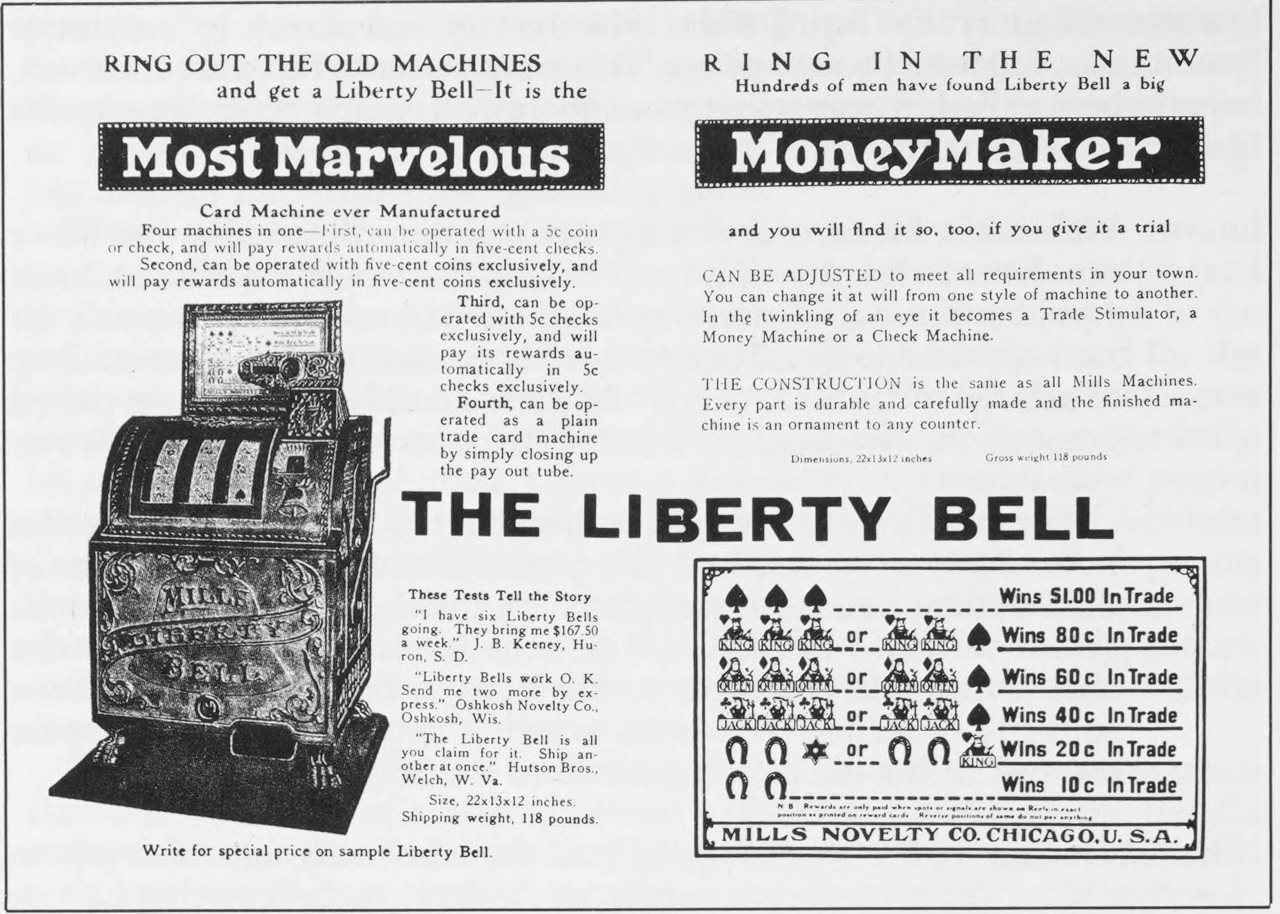
Rachel Thomas at fast.ai compared some AI coding sessions to slot machines. Modern machines give you a "loss disguised as a win": you bet 20 cents, win 15 back, and the lights and sounds go off anyway.
Researchers on gambling call this dark flow. It feels like flow, but it isn't taking you anywhere. Every "it almost works!" can land the same way.
An advert for the Liberty Bell slot machine, 1909.
An expert's confession
Armin Ronacher, a well-known software developer, described his first months with Claude like this:
I did not sleep. I spent two months excessively prompting the thing and wasting tokens. I ended up building and building and creating a ton of tools I did not end up using much.
He was busy the whole time, and very little of it turned out to be useful.
Try this
Time one task. Next time you do a job with AI, note the start and end time. Do a similar job without AI and compare the two. It doesn't need to be scientific.
Count your round trips. If you've re-prompted five times on the same thing, stop and think about whether you'd be faster doing it yourself.
Judge by what's still working a week later, not by how busy the session felt.
Sources
- METR, "Measuring the impact of early-2025 AI on experienced open-source developer productivity", Jul 2025: metr.org/blog/2025-07-10-early-2025-ai-experienced-os-dev-study/
- Rachel Thomas, "Breaking the spell of vibe coding", fast.ai, Jan 2026: fast.ai/posts/2026-01-28-dark-flow/